

from Helvetia Holding AG (isin : CH0466642201)
One in four burglaries occurs between the clocks going back and the end of the year
Helvetia Baloise Holding AG / Key word(s): Study
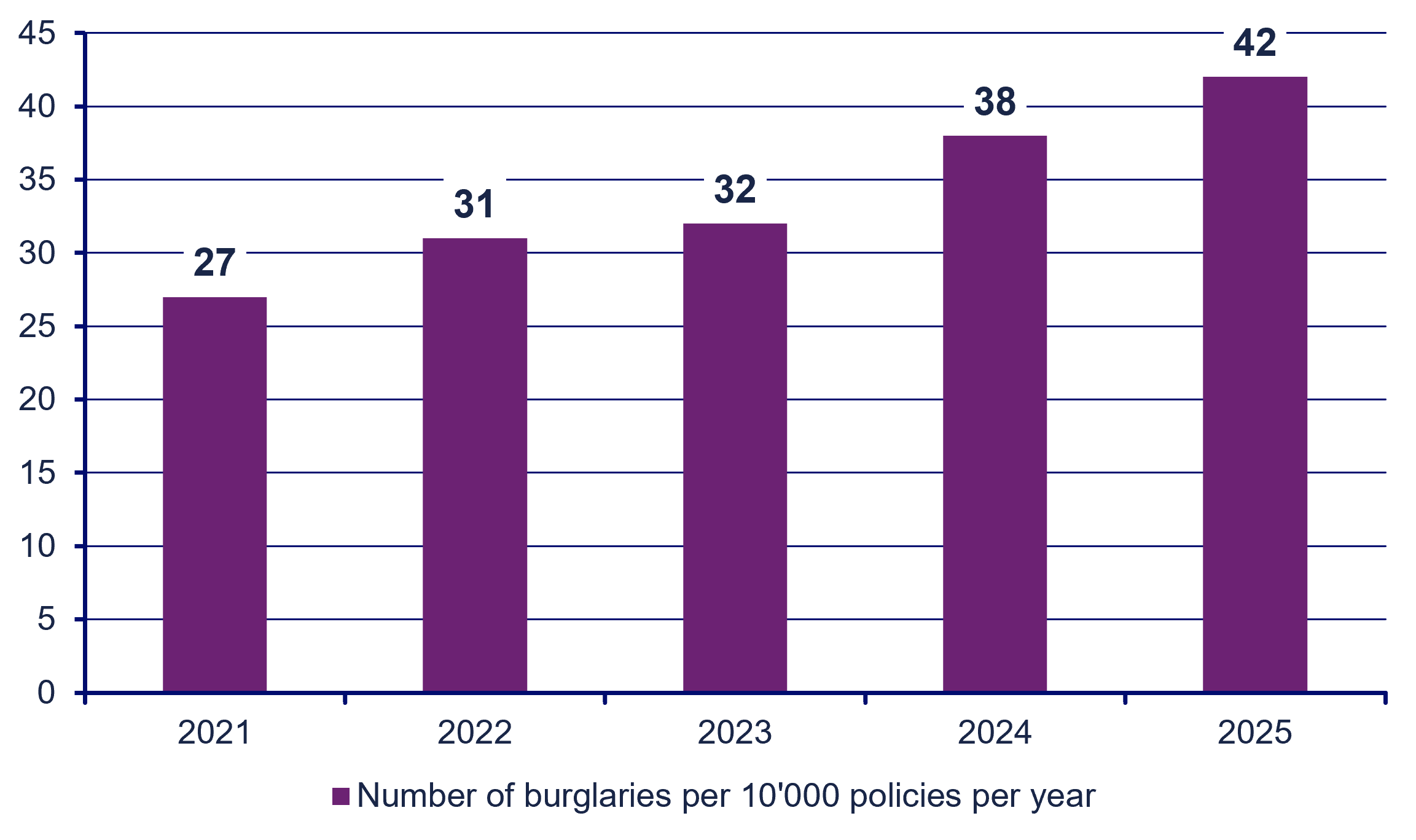
According to Helvetia’s claims data, the number of reported burglaries has risen significantly over the past five years: from around 27 to 42 burglaries per 10,000 policies, representing an increase of approximately 60%. At the same time, the average cost of a claim rose from CHF 6,500 per burglary to more than CHF 7,100 in 2025, an increase of around 9%. Burglaries are particularly common during the darker months of November and December, with around one in four taking place in this period. The analysis also reveals regional hotspots and highlights the importance of simple preventive measures. Now that the clocks have gone back, it becomes dark even earlier in the day. An analysis by Helvetia reveals a sharp rise in burglaries in recent years, with the number of incidents per 10,000 policies climbing from 27 to 42. This represents an increase of approximately 60%, underscoring the fact that burglary remains a serious risk. Beyond the financial loss, burglaries often take a heavy emotional toll on those affected, particularly when their private living spaces are broken into.
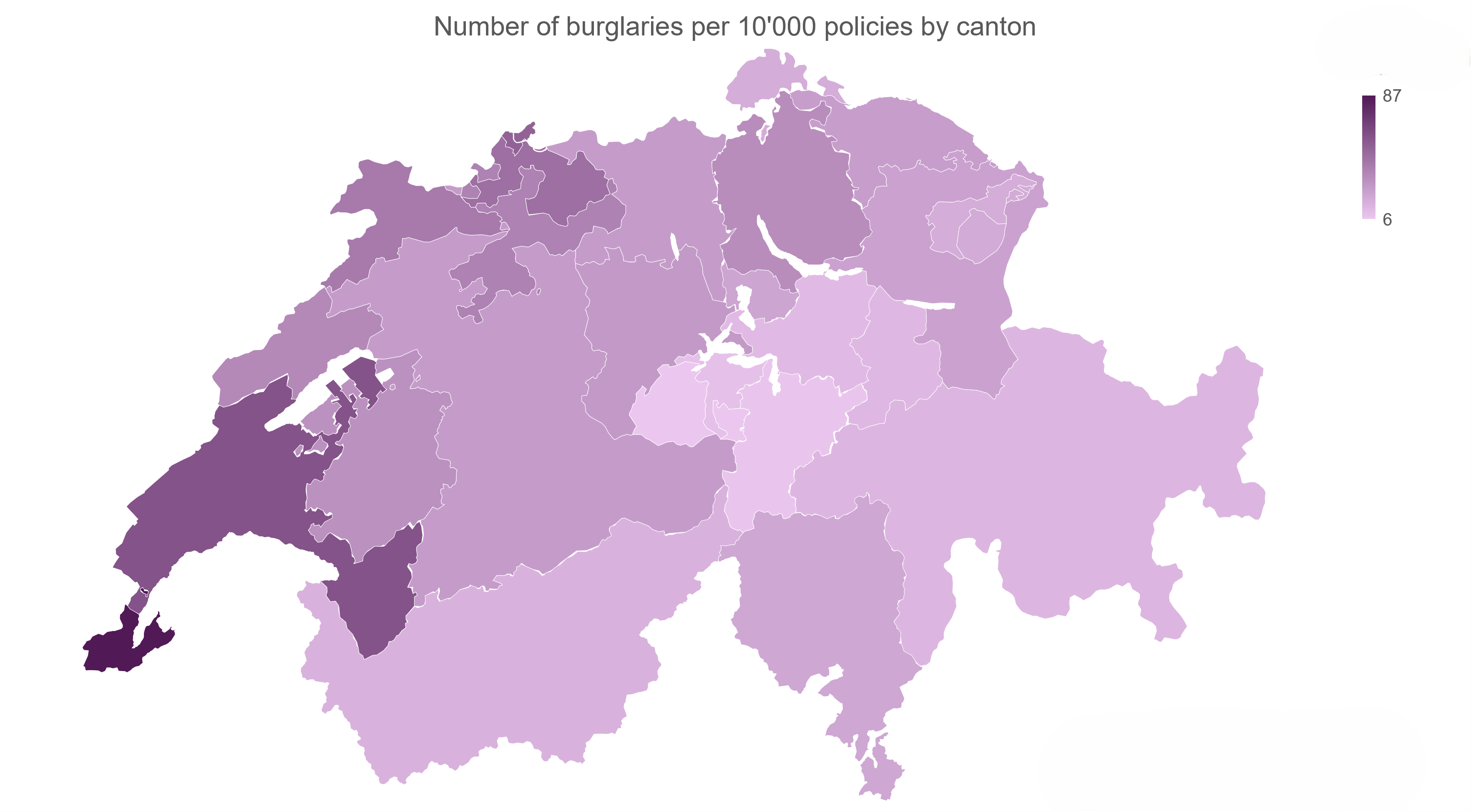
Increased risk of burglary during the darker months People aged 56 to 65 are most likely to experience a burglary Detached homes make particularly attractive targets for burglars Marked regional differences in burglary rates: Geneva tops the list
Average loss exceeds CHF 7,000 There are also considerable differences between the cantons when it comes to the average value of property stolen per burglary. Zug, Nidwalden, Zurich and Geneva recorded the highest figures, with stolen property valued at more than CHF 8,000 per burglary in these cantons. Of the four, Zug tops the list, with an average loss of more than CHF 12,000 per burglary over the past five years. At the other end of the scale are the cantons of Basel-Stadt, Obwalden, Glarus, Valais and Schwyz, where average losses amount to around CHF 4,000 per burglary. It should be noted that these figures do not account for any damage caused to a building as the result of a break-in. They reflect the value of the property stolen only. Prevention remains essential A few simple preventive measures can help reduce the risk of burglary: Doors to houses and apartments should always be locked, windows and balcony and patio doors kept firmly closed (this includes not leaving windows tilted open). Keeping the lights on can give the impression that someone is home. On a related note, it is important not to advertise the fact that the property is empty. Philipp Götschmann also recommends keeping only as much cash at home or in the workplace as is actually required, and advises against hiding valuables in supposedly safe places, as burglars are familiar with the majority of them. “Safes should be properly anchored to prevent them from simply being carried off the premises. If burglars quickly realise there is nothing worth stealing, they are less likely to cause further damage to doors, walls or fixtures and fittings during their search.” Fire extinguishers should not be placed in the vicinity of safes, as burglars may use them to cover their tracks. The analysis yields a clear conclusion: It is well worth reviewing existing security arrangements and following simple preventive measures, especially during the darker months of the year. Keeping cash reserves to a minimum, storing valuables securely and making it harder for burglars to gain entry can all help reduce the risk of a break-in and limit potential losses. Notes on the data analysis
About Helvetia Baloise Disclaimer This document may contain forecasts or other forward-looking statements relating to the Helvetia Baloise Group that, by their nature, involve general and specific risks and uncertainties, and there is a danger that the forecasts, predictions, plans and other explicit or implied content of forward-looking statements may turn out to be incorrect. We would point out that a number of important factors may contribute to the actual outcomes varying greatly from the plans, objectives, expectations, estimates and intentions expressed in such forward-looking statements. These factors include: (1) changes to the general economic situation, particularly in the markets in which we operate, (2) developments in the financial markets, (3) interest-rate changes, (4) exchange-rate fluctuations, (5) changes to laws and regulations, including accounting principles and financial reporting practices, (6) risks associated with the implementation of our business strategies, (7) the frequency, scope and general level of claims, (8) mortality and morbidity rates, (9) policy renewal and lapse rates and (10) the extent to which economies of scale and scope can be realised. In this context, we would point out that the above list of important factors is not exhaustive. When assessing forward-looking statements, you should therefore examine the named factors and other uncertainties carefully. All forward-looking statements are based on information available to the Helvetia Baloise Group on the date of their publication. The Helvetia Baloise Group is only obliged to update such statements when required to do so by applicable law. End of Media Release |
| Language: | English |
| Company: | Helvetia Baloise Holding AG |
| Aeschengraben 21 | |
| 4001 Basel | |
| Switzerland | |
| Internet: | www.helvetia-baloise.com |
| ISIN: | CH0466642201 |
| Valor: | 46664220 |
| Listed: | SIX Swiss Exchange |
| EQS News ID: | 2440930 |
| End of News | EQS News Service |
2440930 24.11.2026 CET/CEST